Shiftless2
Well-known member
Didn't want this to get lost in the US Election thread --- for those not familiar with the Canadian political scene, Poilievre is the leader of the Conservative party (and he's most politely described as Trump lite but not as smart). And the majority party in the Canadian federal government is the Liberals - their head (the Premier) is Justin Trudeau who is hated by a large part of the Canadian populace so it's quite probable that Poilievre will end up as Premier of Canada after the next election.
“Connect the dots,” Christopher Rufo wrote. “Then attack, delegitimize, and discredit.”
Rufo is one of the most effective political actors you’ve likely never heard of. He is not a high-power consultant or some campaign strategist, but a filmmaker, a blogger, and a man who knows how to take down his political adversaries. His track record includes aiding in the ouster of then Harvard University president Claudine Gay, inspiring Florida’s anti-LGBTQ+ laws, and spurring more than seventeen US states to ban critical race theory, the academic discipline that explores systemic racism and its effects on society. Rufo has been derided as a “carnival barker,” and his campaign has been characterized as “alarming and deceptive,” underpinned by “dramatic, dodgy reporting.”
In August, the Canada Strong and Free Network—successor to what was once the Manning Centre for Building Democracy—announced that Rufo would deliver a keynote address at their conference of right-wing thinkers, in Red Deer, Alberta, on “fighting the left and wokeism.” While Rufo is a complete unknown to the average person, he has achieved rock-star status amongst the reactionary right because of his ability to bring the culture war to the doorsteps of the establishment.
These traits are in high demand amongst Conservatives these days. Jamil Jivani, ex-president of the CFSN and current Conservative MP, made his bones in the movement with such declarations as “Critical race theory is a real problem in Canada.” An unrepentant culture warrior, Jivani has had a rise in politics which has closely mirrored that of his old friend and Republican vice presidential nominee, J. D. Vance.
Over the past century, conservative movements in the US and Canada have rarely flowed in parallel. Their aspirations and grievances seldom sounded similar, nor did they share ideological North Stars. Perhaps the only obvious exception was the deregulation craze that swept both Brian Mulroney and Ronald Reagan into office.
But a variety of factors has pushed to one side the files that would normally define the US–Canada relationship. The North American Free Trade Agreement was renegotiated under the first Trump term; plans to modernize the North American Aerospace Defense Command are already in the works; and the huge influx of asylum seekers crossing the land border into Canada has largely been halted. Fractious domestic politics in America and international tumult mean that Democratic and Republican politicians think rarely, if ever, about us. Bottom line: a hypothetical Poilievre government doesn’t have to think too hard about the things that may normally vex a Canadian prime minister about the relationship with our southern neighbour—regardless of who occupies the White House. Even on outstanding issues, like our anemic defence spending, Poilievre has managed to skate by on a few high-level slogans, without much consequence.
Poilievre’s greatest challenge with the US, however, is far less a question of traditional statecraft than one of ideology. Figures like Rufo are now a massive pole for Canadian conservative thought, and even Poilievre’s MPs—like Jivani—are happy to feel the magnetic pull.
The MAGA movement has steadily radicalized itself since its inception, feeding on its leader’s bombast and anti-establishment zeal. From its beginnings as a protectionist and nationalist movement to its hard-right turn on abortion and LGBTQ+ rights, and into the expansive conspiracism of election denialism and its chilling calls of “mass deportations now”—Trump and his political project have become a self-moving force, each acting on the other as they stray further into the political unknown.
Pierre Poilievre is not, despite the allegations of his critics, Donald Trump. But he is dancing many of the same steps, and his movement is increasingly tuned to the MAGA frequency. Poilievre has cribbed Trump’s warnings of “globalists” and a “deep state” with his professed fears of the World Economic Forum. He has borrowed Republican attacks on transgender people and taken to calling Justin Trudeau and his father “Marxist.” Poilievre has leaned into growing skepticism around immigration levels while adopting Trumpian tag lines to paint our urban centres as dangerous hellscapes.
The Conservatives see this as a delicate dance: an attempt by Poilievre to show that he knows how to play the hits popularized by Trump—anti-woke, anti-DEI, anti-WEF. But by being primarily responsive to what die-hard conservatives want, Poilievre puts himself at their mercy.
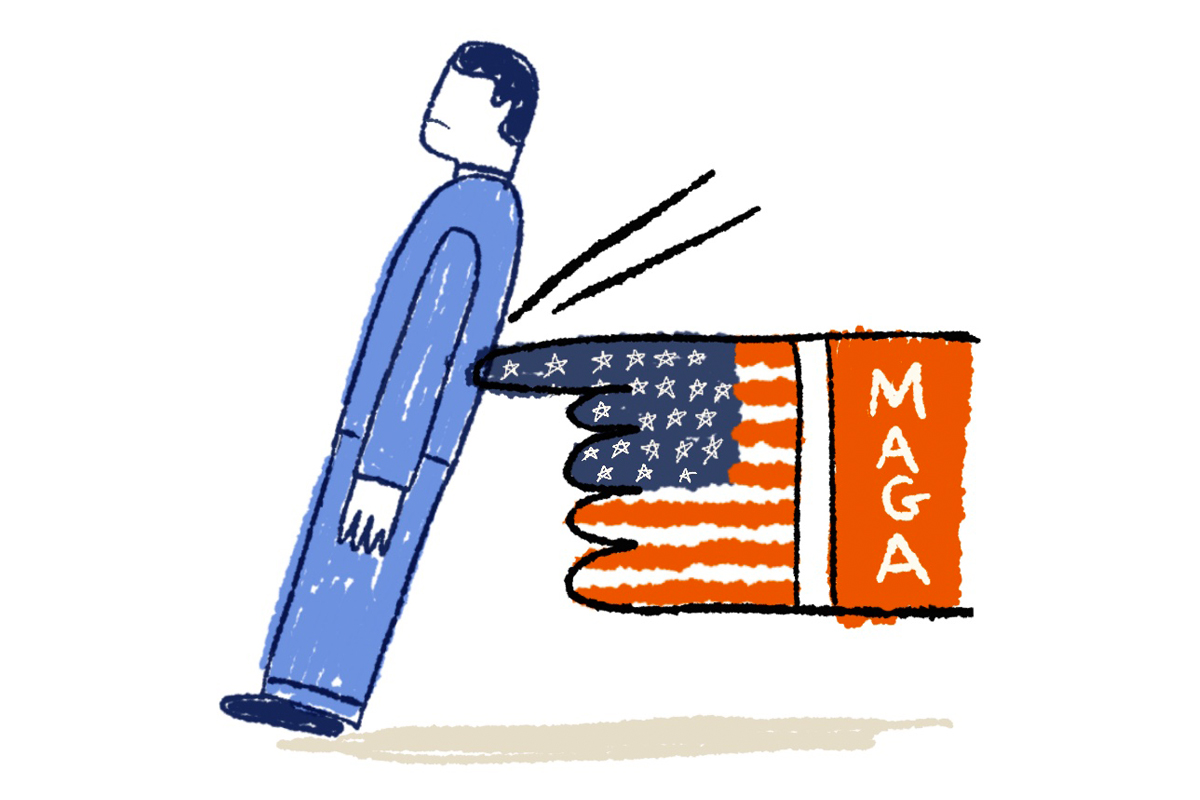
That’s a dangerous game. It means that Poilievre is not the top banana in his own movement: Trump is. Others, like Rufo, hold as much sway with the priorities and paranoias of the movement as the Conservative leader does.
As I write this, we don’t know who will occupy the White House for the next four years. But whether he wins, loses, or loses and insists he won, Trump and his MAGA movement will control much more of Poilievre’s political destiny than the latter would care to admit.
Christopher Rufo wrote. “Then attack, delegitimize, and discredit.”
Rufo is one of the most effective political actors you’ve likely never heard of. He is not a high-power consultant or some campaign strategist, but a filmmaker, a blogger, and a man who knows how to take down his political adversaries. His track record includes aiding in the ouster of then Harvard University president Claudine Gay, inspiring Florida’s anti-LGBTQ+ laws, and spurring more than seventeen US states to ban critical race theory, the academic discipline that explores systemic racism and its effects on society. Rufo has been derided as a “carnival barker,” and his campaign has been characterized as “alarming and deceptive,” underpinned by “dramatic, dodgy reporting.”
In August, the Canada Strong and Free Network—successor to what was once the Manning Centre for Building Democracy—announced that Rufo would deliver a keynote address at their conference of right-wing thinkers, in Red Deer, Alberta, on “fighting the left and wokeism.” While Rufo is a complete unknown to the average person, he has achieved rock-star status amongst the reactionary right because of his ability to bring the culture war to the doorsteps of the establishment.
These traits are in high demand amongst Conservatives these days. Jamil Jivani, ex-president of the CFSN and current Conservative MP, made his bones in the movement with such declarations as “Critical race theory is a real problem in Canada.” An unrepentant culture warrior, Jivani has had a rise in politics which has closely mirrored that of his old friend and Republican vice presidential nominee, J. D. Vance.
Continued
Poilievre’s Dangerous Dance with MAGA-Style Politics
By being responsive to die-hard conservatives, he puts himself at their mercy
Justin Lin“Connect the dots,” Christopher Rufo wrote. “Then attack, delegitimize, and discredit.”
Rufo is one of the most effective political actors you’ve likely never heard of. He is not a high-power consultant or some campaign strategist, but a filmmaker, a blogger, and a man who knows how to take down his political adversaries. His track record includes aiding in the ouster of then Harvard University president Claudine Gay, inspiring Florida’s anti-LGBTQ+ laws, and spurring more than seventeen US states to ban critical race theory, the academic discipline that explores systemic racism and its effects on society. Rufo has been derided as a “carnival barker,” and his campaign has been characterized as “alarming and deceptive,” underpinned by “dramatic, dodgy reporting.”
In August, the Canada Strong and Free Network—successor to what was once the Manning Centre for Building Democracy—announced that Rufo would deliver a keynote address at their conference of right-wing thinkers, in Red Deer, Alberta, on “fighting the left and wokeism.” While Rufo is a complete unknown to the average person, he has achieved rock-star status amongst the reactionary right because of his ability to bring the culture war to the doorsteps of the establishment.
These traits are in high demand amongst Conservatives these days. Jamil Jivani, ex-president of the CFSN and current Conservative MP, made his bones in the movement with such declarations as “Critical race theory is a real problem in Canada.” An unrepentant culture warrior, Jivani has had a rise in politics which has closely mirrored that of his old friend and Republican vice presidential nominee, J. D. Vance.
Over the past century, conservative movements in the US and Canada have rarely flowed in parallel. Their aspirations and grievances seldom sounded similar, nor did they share ideological North Stars. Perhaps the only obvious exception was the deregulation craze that swept both Brian Mulroney and Ronald Reagan into office.
But a variety of factors has pushed to one side the files that would normally define the US–Canada relationship. The North American Free Trade Agreement was renegotiated under the first Trump term; plans to modernize the North American Aerospace Defense Command are already in the works; and the huge influx of asylum seekers crossing the land border into Canada has largely been halted. Fractious domestic politics in America and international tumult mean that Democratic and Republican politicians think rarely, if ever, about us. Bottom line: a hypothetical Poilievre government doesn’t have to think too hard about the things that may normally vex a Canadian prime minister about the relationship with our southern neighbour—regardless of who occupies the White House. Even on outstanding issues, like our anemic defence spending, Poilievre has managed to skate by on a few high-level slogans, without much consequence.
Poilievre’s greatest challenge with the US, however, is far less a question of traditional statecraft than one of ideology. Figures like Rufo are now a massive pole for Canadian conservative thought, and even Poilievre’s MPs—like Jivani—are happy to feel the magnetic pull.
The MAGA movement has steadily radicalized itself since its inception, feeding on its leader’s bombast and anti-establishment zeal. From its beginnings as a protectionist and nationalist movement to its hard-right turn on abortion and LGBTQ+ rights, and into the expansive conspiracism of election denialism and its chilling calls of “mass deportations now”—Trump and his political project have become a self-moving force, each acting on the other as they stray further into the political unknown.
Pierre Poilievre is not, despite the allegations of his critics, Donald Trump. But he is dancing many of the same steps, and his movement is increasingly tuned to the MAGA frequency. Poilievre has cribbed Trump’s warnings of “globalists” and a “deep state” with his professed fears of the World Economic Forum. He has borrowed Republican attacks on transgender people and taken to calling Justin Trudeau and his father “Marxist.” Poilievre has leaned into growing skepticism around immigration levels while adopting Trumpian tag lines to paint our urban centres as dangerous hellscapes.
The Conservatives see this as a delicate dance: an attempt by Poilievre to show that he knows how to play the hits popularized by Trump—anti-woke, anti-DEI, anti-WEF. But by being primarily responsive to what die-hard conservatives want, Poilievre puts himself at their mercy.
That’s a dangerous game. It means that Poilievre is not the top banana in his own movement: Trump is. Others, like Rufo, hold as much sway with the priorities and paranoias of the movement as the Conservative leader does.
As I write this, we don’t know who will occupy the White House for the next four years. But whether he wins, loses, or loses and insists he won, Trump and his MAGA movement will control much more of Poilievre’s political destiny than the latter would care to admit.
Christopher Rufo wrote. “Then attack, delegitimize, and discredit.”
Rufo is one of the most effective political actors you’ve likely never heard of. He is not a high-power consultant or some campaign strategist, but a filmmaker, a blogger, and a man who knows how to take down his political adversaries. His track record includes aiding in the ouster of then Harvard University president Claudine Gay, inspiring Florida’s anti-LGBTQ+ laws, and spurring more than seventeen US states to ban critical race theory, the academic discipline that explores systemic racism and its effects on society. Rufo has been derided as a “carnival barker,” and his campaign has been characterized as “alarming and deceptive,” underpinned by “dramatic, dodgy reporting.”
In August, the Canada Strong and Free Network—successor to what was once the Manning Centre for Building Democracy—announced that Rufo would deliver a keynote address at their conference of right-wing thinkers, in Red Deer, Alberta, on “fighting the left and wokeism.” While Rufo is a complete unknown to the average person, he has achieved rock-star status amongst the reactionary right because of his ability to bring the culture war to the doorsteps of the establishment.
These traits are in high demand amongst Conservatives these days. Jamil Jivani, ex-president of the CFSN and current Conservative MP, made his bones in the movement with such declarations as “Critical race theory is a real problem in Canada.” An unrepentant culture warrior, Jivani has had a rise in politics which has closely mirrored that of his old friend and Republican vice presidential nominee, J. D. Vance.
Continued