
You are using an out of date browser. It may not display this or other websites correctly.
You should upgrade or use an alternative browser.
You should upgrade or use an alternative browser.
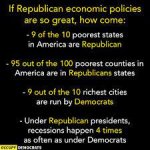
Talk about voting against your own best interests
- Thread starter Shiftless2
- Start date


Tom Maggliozzi said a redneck's famous last words: "Hey Fellas! Watch THIS !!"
I also note the sharp gradient between Nevada and California. I don't know how many A-bomb tests we did out there ... White Sands, New Mexico, etc.
BTW
It might help to see a financial / economic overlay, to examine the $economic correlation. Problem is, post hoc ergo propter hoc. The question then would be, does the poverty cause the shorter life-span? Or are the poor attracted to locations where cost of living is low, but that simultaneously means where public safety is also a lower priority?
I also note the sharp gradient between Nevada and California. I don't know how many A-bomb tests we did out there ... White Sands, New Mexico, etc.
BTW
It might help to see a financial / economic overlay, to examine the $economic correlation. Problem is, post hoc ergo propter hoc. The question then would be, does the poverty cause the shorter life-span? Or are the poor attracted to locations where cost of living is low, but that simultaneously means where public safety is also a lower priority?
Shiftless2
Well-known member
Does this help


 appliedsentience.com

8 Economic Indicators — Are Red or Blue States Better?
In comparing the quality of life between Red vs Blue states, I’ll be grouping all 23 indicators into 4 main categories: 4 Crimes Indicators, 4 Social Indicators, 7 Health Indicators 8 Economi…
appliedsentience.com
Thanks S2,
I guess I'll stay in New York a while longer.
One of the ironies I've read of the "red" State vs "blue" State divide is the "red" States tend to be more resentful of federal taxation, yet are net beneficiaries of it, meaning while "red" States pay federal taxes, they receive $more in federal benefits than they pay for.
The irony if any is, that $shortfall is made up by mostly "blue" States, that don't seem to whine as much about taxation.
I guess I'll stay in New York a while longer.
One of the ironies I've read of the "red" State vs "blue" State divide is the "red" States tend to be more resentful of federal taxation, yet are net beneficiaries of it, meaning while "red" States pay federal taxes, they receive $more in federal benefits than they pay for.
The irony if any is, that $shortfall is made up by mostly "blue" States, that don't seem to whine as much about taxation.
"Everybody wants to go to Heaven, but nobody wants to die. ... People want the public services. We can't have the public services without some level of taxation."
United States House of Representatives Financial Services Chairman Barney Frank
Forbes
Business
Breaking
Aug 16, 2024,03:49pm EDT
Central to Vice President Kamala Harris’ economic agenda is a proposal to combat “price gouging” on food products, an initiative aimed at tackling voters’ top priority in inflation, though the benefits of the bold plan are not immediately clear, and it faces a wall of criticism from industry groups and some economists.
But price gouging is not a “technical term in economics,” according to the Federal Reserve Bank of Richmond, meaning the concept is far from agreed upon like other economic effects such as supply and demand or the inverse relationship between inflation and unemployment, and it’s less clear what the effects of efforts to limit price gouging would look like or their efficacy.
The Harris campaign said Friday it plans to ban price gouging to combat “the excessive prices unrelated to the costs of doing business that Americans have seen in the food and grocery industry,” as well as crack down on mergers and acquisitions in the food industry to keep competition robust.
Yet it remains unclear that restrictions on grocery price increases will have the intended effect of helping the American consumer, as food prices are historically fickle as they can go up or down based on a variety of factors, like less rain in Western Africa causing cocoa prices to skyrocket or an American avian flu outbreak causing egg prices to spike, in addition to the alleged corporate greed.
And it’s hardly a consensus view that corporate profit taking was the sole driver of soaring food prices: A Federal Reserve Bank of San Francisco study published in May found “rising markups have not been a main driver” of inflation over the last three years.
“Price regulation can be beneficial, but it's tricky,” Carnegie Mellon University economics professor Felix Koenig explained to Forbes.

 www.forbes.com
Perhaps a more vivid memory of government regulated prices, President Nixon's "wage & price controls", didn't work out very well.
Is this Harris plan merely campaign pandering?
Or is there significant risk President Harris would follow-through?
Business
Breaking
What Is Price Gouging? Here’s What To Know About Kamala Harris’ Core Economic Policy
Derek Saul / Forbes Staff / Derek Saul has covered markets for the Forbes news team since 2021.Aug 16, 2024,03:49pm EDT
Central to Vice President Kamala Harris’ economic agenda is a proposal to combat “price gouging” on food products, an initiative aimed at tackling voters’ top priority in inflation, though the benefits of the bold plan are not immediately clear, and it faces a wall of criticism from industry groups and some economists.
Key Facts
Price gouging can broadly be defined as when sellers charge more for a product than the fair market dictates based on supply and demand in order to make a higher profit, typically taking advantage of an adverse situation—think ballpark vendors charging twice the normal gameday price for a bottle of water when it’s 100 degrees.But price gouging is not a “technical term in economics,” according to the Federal Reserve Bank of Richmond, meaning the concept is far from agreed upon like other economic effects such as supply and demand or the inverse relationship between inflation and unemployment, and it’s less clear what the effects of efforts to limit price gouging would look like or their efficacy.
The Harris campaign said Friday it plans to ban price gouging to combat “the excessive prices unrelated to the costs of doing business that Americans have seen in the food and grocery industry,” as well as crack down on mergers and acquisitions in the food industry to keep competition robust.
Yet it remains unclear that restrictions on grocery price increases will have the intended effect of helping the American consumer, as food prices are historically fickle as they can go up or down based on a variety of factors, like less rain in Western Africa causing cocoa prices to skyrocket or an American avian flu outbreak causing egg prices to spike, in addition to the alleged corporate greed.
And it’s hardly a consensus view that corporate profit taking was the sole driver of soaring food prices: A Federal Reserve Bank of San Francisco study published in May found “rising markups have not been a main driver” of inflation over the last three years.
“Price regulation can be beneficial, but it's tricky,” Carnegie Mellon University economics professor Felix Koenig explained to Forbes.
Would A Price Gouging Ban Work?
“The kind of logic that Kamala Harris and others are proposing is that these markets aren't really competitive,” said Koenig, adding the “key question” is whether or not they are regulating an “imperfect” market. That’s a critical distinction considering price caps in an already competitive market can have the unintended effect of discouraging new companies from entering a market, making an industry less competitive over the long run. “Economists generally oppose most price controls, believing that they produce costly shortages and gluts,” wrote Federal Reserve Bank of St. Louis economist Christopher J. Neely in a 2022 article.Big Number
27%. That’s how much more expensive groceries were last month than they were in July 2019, according to the consumer price index’s food at home subcategory. That equates to 5.4% annualized grocery inflation
What Is Price Gouging? Here’s What To Know About Kamala Harris’ Core Economic Policy
“Price regulation can be beneficial, but it's tricky,” one economist explained to Forbes.
www.forbes.com
Perhaps a more vivid memory of government regulated prices, President Nixon's "wage & price controls", didn't work out very well.
Is this Harris plan merely campaign pandering?
Or is there significant risk President Harris would follow-through?